As the winter is showing its teeth and extremely cold weather, there is always this happy thought of spending time in the mountains, rolling down the ski slopes, vivid blue skys and white snow, dreamy views and imaginable freedom. Skiing as a sport gives endless pleasure and joy to its participants. As it is in life, either you adore skiing and all the joy this sport gives you or you hate the idea of cold, fiscally exhausting and borderline dangerous sport. Still, whatever type you are, everyone finds pleasure in the social activities and entertainment following a day’s skiing.
For winter ski holiday there is a long history of styling and fashion trends that have been popularized. From the stretch pants of the 1950s to the one-piece suits of the 1980s, skiers have, for a long time, liked to look good—and be comfortable—both on and off the slopes. From the early beginning a prevailing outfit included simply sweater, trousers, and boots. Wool was a common material, and colors included dark blues, grays, and browns. The 1950s and 60s brought glamour to the slopes. Skiing became a trendy pastime, and suddenly, what you wore mattered almost as much as how well you could ski.
One of the first European skiing styles and looks could be seen in resorts like St. Moritz, Switzerland, which is widely recognized as the world’s first ski resort, starting its winter tourism in 1864 with British visitors, or St. Anton am Arlberg, Austria, which was considered the cradle of alpine skiing. In regard to the fashion craze, the early 1950s, the ski fashion house Bogner introduced what would eventually become a slopeside sensation: stretch pants. The pants, which included stirrups, were made with a flexible material and slid into the ski boot, became so synonymous with their label that they spawned a mass-culture interest in ski clothes, exemplified by celebrities like Marilyn Monroe and Jayne Mansfield, who adopted the slopeside fashion. This was only one example of how large and old ski fashion culture is; there were a number of following trends, styles, and fashion brands who made their mark in this particular field. The heavy woollen sweaters were gone; in came design and materials like nylon, and designers like Emilio Pucci introduced bold patterns that made skiers stand out as much for their clothes as for their skills.
Where is ski clothing today?
Skiing clothing style kept its importance for both technical and design features. Features and materials have become more advanced, but styles and looks are inspired by some of the most famous historical looks. As it was for jumpsuites, that would become synonymous with 1980s ski style, as evidenced by one trip Princess Diana made to Klosters, Switzerland, in 1986. She wore a red jumpsuit accompanied by a stylish headband. For the past few seasons jumpsuites have made their way back to slopes. Ski fashion today is a wonderful mix of the history and future.
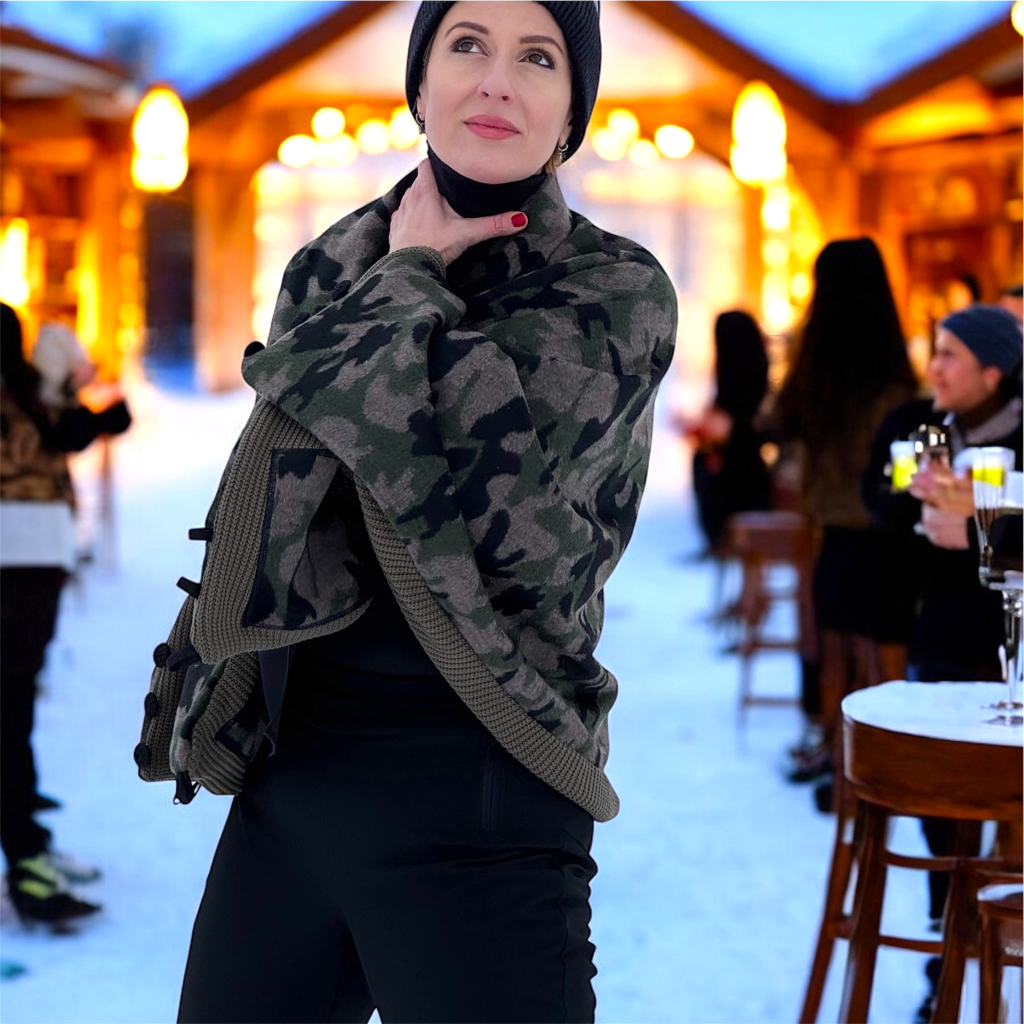
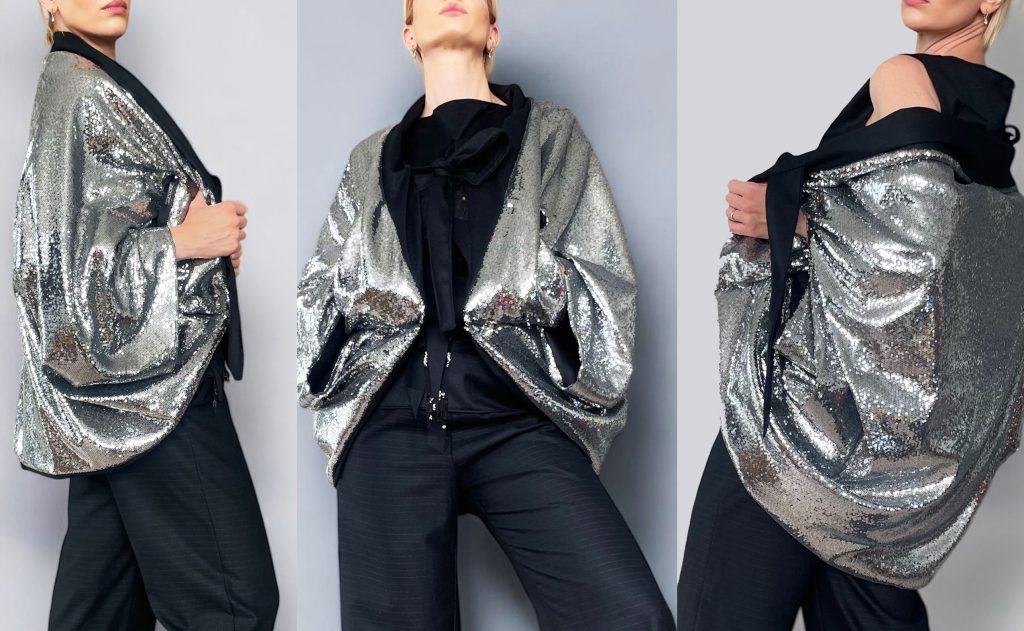
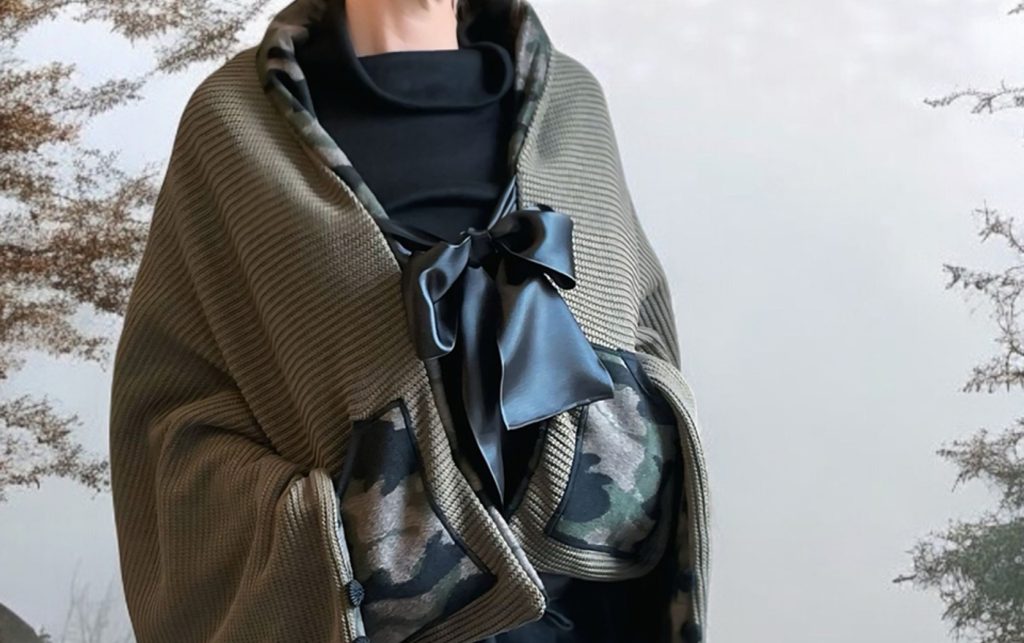
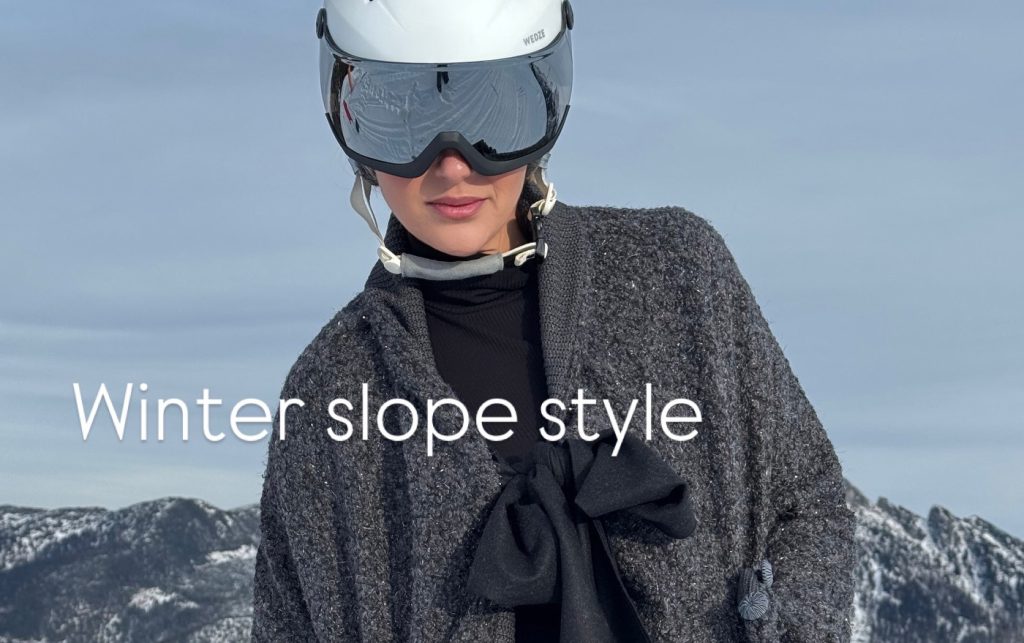
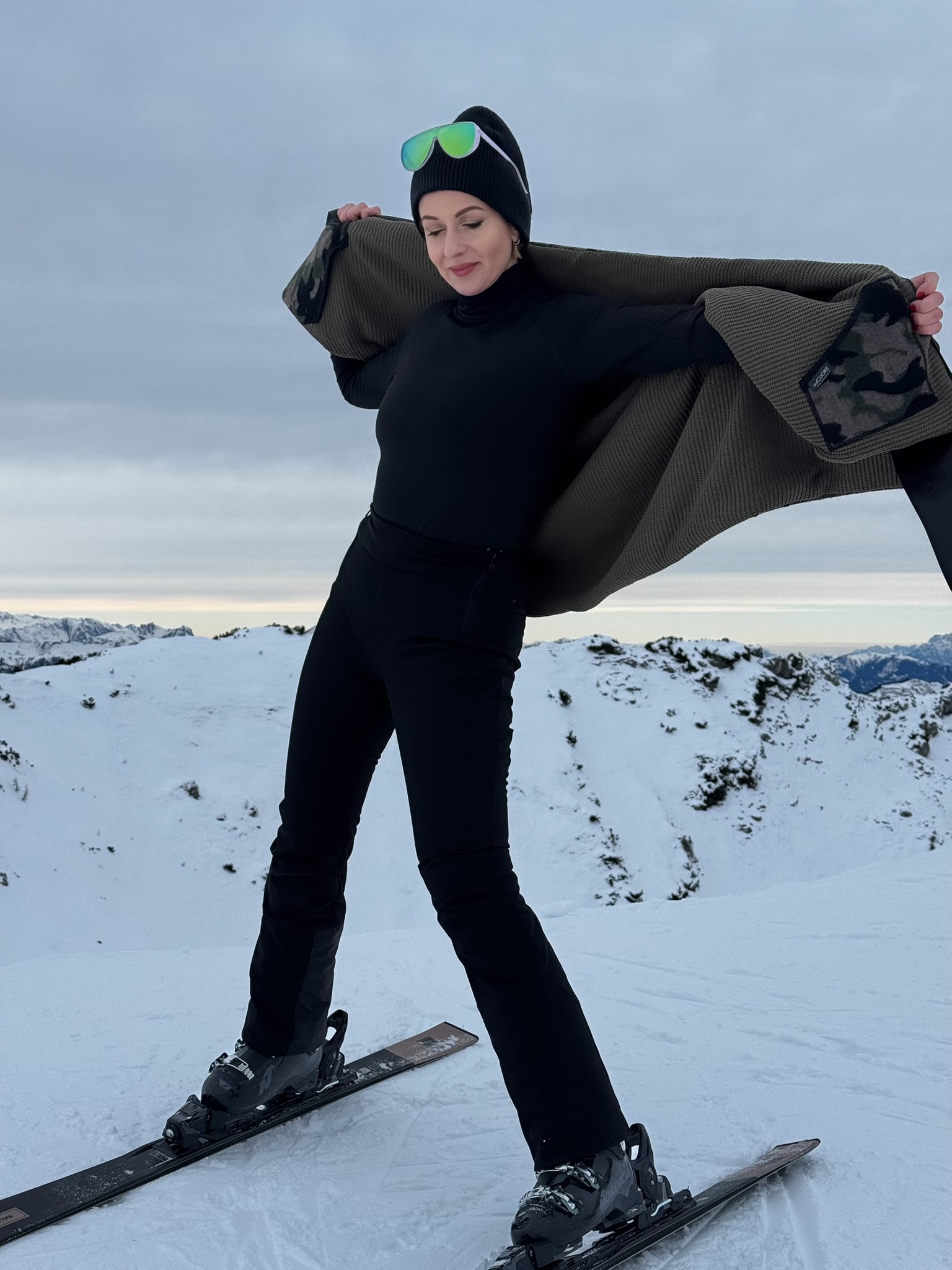
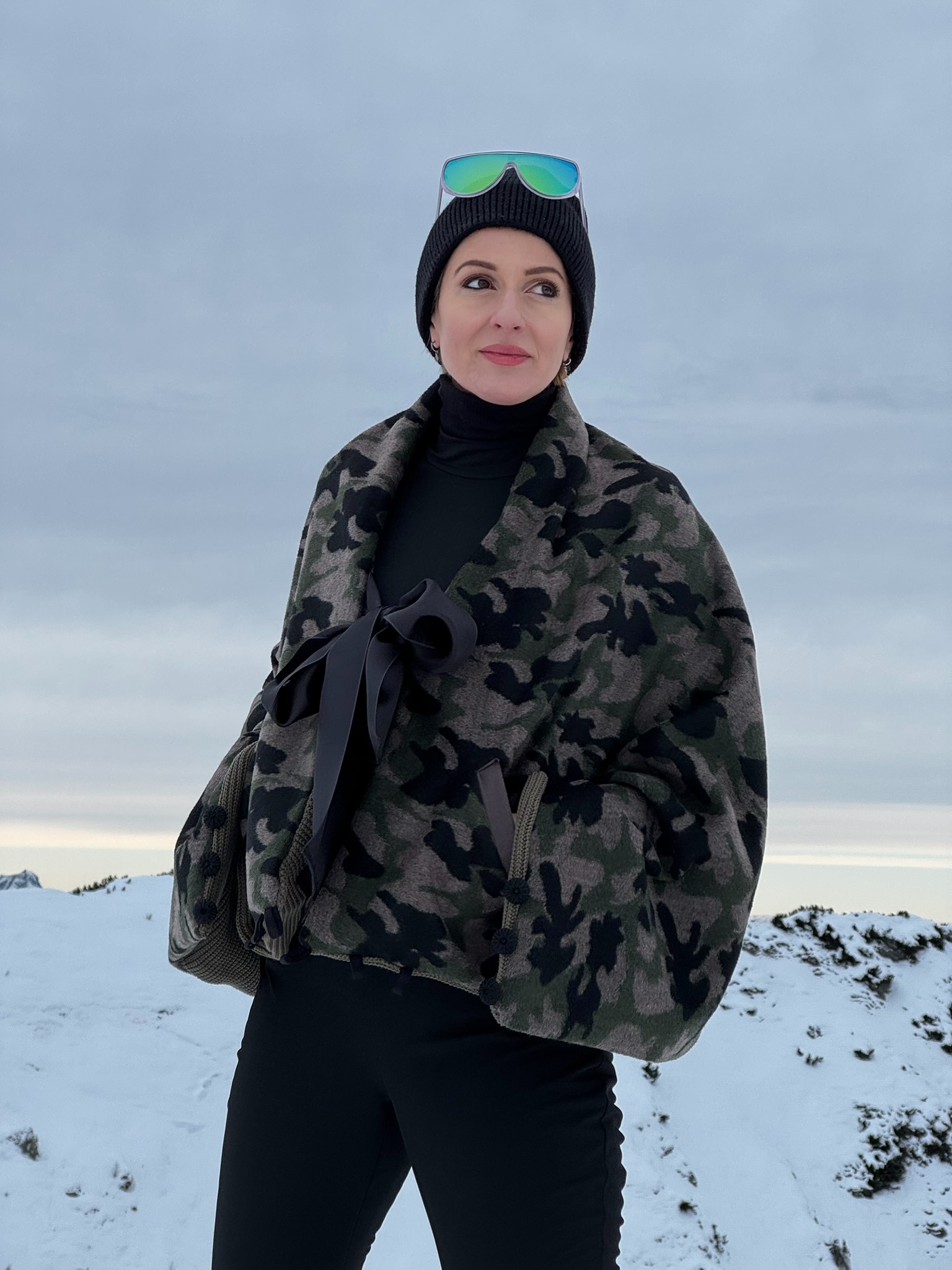
Functionality meets style. Modern ski wear isn’t just about keeping warm; it’s about being sustainable, high-tech, and effortlessly chic. On the other hand “après-ski” is now a clothing category all on its own, inspiring throwback gear and modern looks where one chooses his/her own individual style. For this after ski moments Dal Cuore pelerine (inspired by bolero/pelerine from 1950’s) are ment to be luxury covers that provide warmth and glamour, acting as sophisticated coverings. In essence its function is to add shoulder coverage with luxurious fabrics and one-of-a-kind design making you warm, chic & unique.
From the days of simple wool pullovers to modern, sleek designs, ski fashion has seen an incredible transformation. So remember: what you wear on the slopes is as much about the experience as the skiing itself. Enjoy the moment, enjoy the experience and be free to choose style that is right for you.